Hello Magical Souls,
This November (2025) marks 3 years since we moved to Yokohama. In the spirit of thanks giving, I would like to narrate my experience as an expat, how happy I am to be living here, and list all the things I like about Japan …
It was written in my stars that I would either live in a foreign country or marry a foreigner. I ended doing both: marrying a foreigner in a foreign country and going to live abroad. I moved out of France just as the first Euro coins were issued. Since January 2002, I have lived successively in Germany, Switzerland, Norway, Mexico, and now Japan. Plus I travelled to a lot more countries.
My Angels told me I could bloom anywhere in the world. I don’t think it’s true, some places are far too harsh for my sensitive, empathic, intuitive person but I came to think it means that anywhere I am destined to go, I can adapt, find a purpose, and bloom there. Japan so far is one of my favorite and agrees with my energy.

A spiritual journey
Being an expat, living abroad, is a spiritual journey in itself. It’s about resilience, courage, and patience. And when you keep doing it, I am not sure what that means. And when you bring your kids with you, I am also not sure what that means. When you live as an expat, you are yanked out of your comfort zone, you slowly detach from your culture and start discovering your true self beyond your citizenship.
- getting out of your comfort zone
The first time I moved from France to the northerner part of Germany I really had a hard time. I anticipated it would be hard but the hardest parts came as a surprise. I moved there when Winter was in full swing, the cold and dark days echoed the coldness -if not the rudeness- of the German. Plus when I arrived at the university, my colleagues were upset with me for just being there but at the time I didn’t have the backstory, so I couldn’t understand the hostility. The food was a problem. I couldn’t understand what I was buying and what I was looking for they were not selling, so I had to adapt my comfort foods to German comfort foods. It took a while. 😩 Being away from my family was hard especially since my parents wanted me to save on international calls and every time I was calling was like: “We are good. Are you good? Yes? How is the weather? Cold? Ok! We love you! Bye!” and they would hung up. I had no time to speak about my tough experience integrating, the food, or any other depressive experiences I had …
At the end, I adapted, made friends, became more fluent in German and English, and eventually found a way to bloom.
I feel definitely shaken to my core each time I move to another country. Each time it takes time for the dust to settle and for me to find my marks again.

- detaching from your home country cultural and societal expectations
As hard as you try, you cannot bring your whole home culture to your new country. For ex. there is a reason why Norwegians have supper at 5pm and Spanish at 9pm. Or why Germans and Norwegians are quite cold and rude and why Swiss and Japanese are so polite. Or why in some countries you absolutely have to take out your shoes at the door and in some it is impolite to do so.
Some societal expectations are easier to adopt than others. I don’t mind taking out my shoes when entering a home, or not speaking loud in the train, but listening to Mariachis at 2 am because the neighbor wants to declare his love to his wife is harder to get used to.
Each mini-cultural shock helps you realize how much you were molded by your home country and make you rethink certain things, especially on how you want to raise your kids. For ex. It’s alright to let your kids run around, and play, and scream in a Mexican restaurant, it’s absolutely not accepted in France. You have to decide to draw the line somewhere.


- learning different cultures and opening your mind – broader perspective, also on your home country and culture.
I remember during a home party in Germany speaking to a Danish student who quite aggressively asked me, as a French girl, what is my problem with royalty? I was so confused and he was like “You behead them? La guillotine!”
And I was like “you don’t?” 😅
I hadn’t realized the French revolution was so infamous abroad. I must also admit I hadn’t realized all Scandinavian countries still have their beloved royal families as official head of states.
Still a weird thing to be riled about! 🤨


- releasing control
You cannot control others and change their entire culture. You have to decide what is important for you and your kids and release control of the rest.
I remember in Mexico, my 2-year old son’s school was preparing a showcase of various world cultures to show the kids: we are many people, many cultures. And because he is French, the school gave him the opportunity to dress as a French person.
They gave me 2 options for his clothing: a Napoleonian army uniform with the bicorne – which no French person wears today –
or … a mime costume – which also no French person wears today unless they mime. 😒
I was studying the two options – confused and a little bit offended – and realized that I wouldn’t be able to buy the army uniform anywhere so … that left the mime costume. The stripped T-shirt, the black pants, the beret, and the red bandana.
By that time I was really offended and was considering going back to school and telling them that no my son would not dress as a mime because that is not what French people wear! That’s when I heard my Angels say: before you do that, look at what you are wearing!
I looked down and I was wearing black pants with a stripped T-shirt. 🤣 So I decided that maybe, maybe, the school had a point and French people do dress in a certain way and that ultimately it didn’t matter because my son wouldn’t remember it.

- re-inventing yourself
Each time I am moving I have to reinvent myself, starting with breakfast … simply because I don’t always get the right ingredients for my usual breakfast. For ex. they didn’t sell proper baguette or croissants in our Mexican town. So that French breakfast went out of the window.
Every time I move I have to look for a new gym and/or a new way of exercising, a new way of dressing adapting to the country’s fashion (showing no cleavage in Japan, for ex.) or climate, a new way of commuting (by car in mexico, buy train in Japan, by foot in Norway), and more …
I feel myself becoming a new person in each new country.

- discovering your true self and loosing your old identity
Nobody knows who you are when you arrive so you could let your old personality behind and choose another. But more than reinventing yourself it is more like discovering your true self beyond how you were raised, how you were molded by your culture and societal expectations. It is learning new things, experiencing new things, broadening your perspectives. It is becoming aware of your true values, opening your heart, and maybe even redefining your life purpose.
Did you know emoji were originally invented in Japan?
That's why so many emoji depict Japanese things!
Like the ♨️, 🎋, 🍢, 🎎, 🏩 and more ...
Read here.
What I like in Japan
The group "The Yokohama Sisters"
from Yokohama
with a music video of Yokohama!
- the scenery
Japan is a beautiful country with lots of mountain, lakes, waterfalls, temples and shrines, and preserved Edo-style houses. But most importantly these sites are considered sacred by Japanese people. They truly revere and take car of their Nature and their possessions. You can feel this reverence when you hike up a mountain or walk in town. It’s difficult to describe but it is like when you go for a nature walk at some site you know is sacred, you feel the sacredness around you, but in Japan many others also feel it with you.
They even have 2 holidays, Mountain Day and Marine Day, to revere Nature.


- hiking + forest bathing
I love being able to hike, to take forest baths, to connect with Nature and your true self.

- having a bathtub at home
Something I missed since Switzerland. Having a salt bath for cleansing my aura and meditating with my Angels is what I need when the gloom becomes too much.

- the onsen ♨️
Public baths especially with thermal water is awesome.
- the cute couples dressed the same
So many couples go out dressed the same. I guess because there is no PDA in Japan, couple have to announce they are in fact together by wearing same clothing.
- the food
Japanese food is amazing! It’s fresh and healthy and, apart from some really weird stuff, it tastes so good. But I also like that here I can find some authentic French food in restaurants as well as at the supermarket. I don’t miss my home country cuisine like I did in Mexico. And very importantly they have French bred and pastries everywhere.

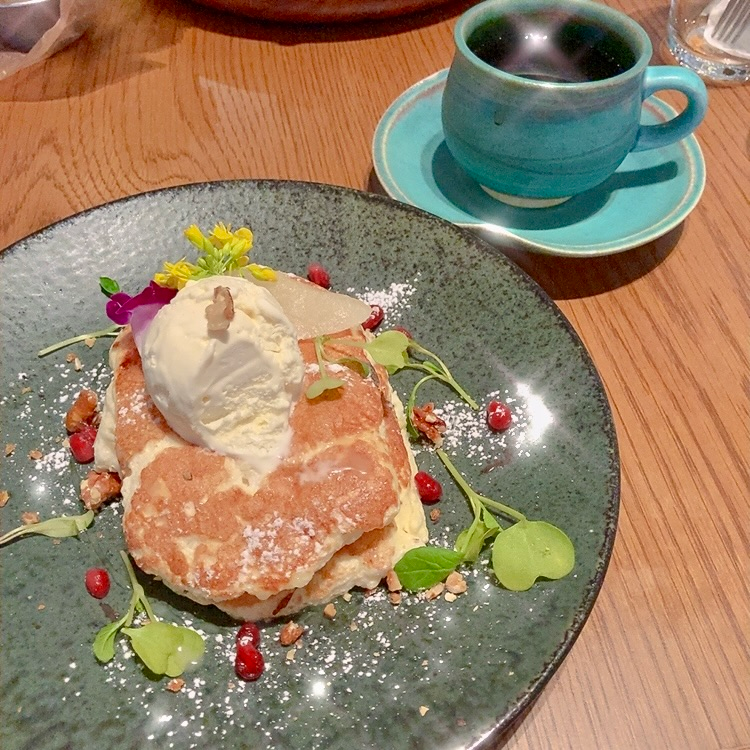
- the cute coffee places
I love having coffee in town and there are so many cafés here. Some are chains like Doutor, Komeda, Uni coffee roastery etc. but some are more local like Caravan coffee.
- the quiet
I love the quiet. We are not supposed to be loud in the train or the bus and it is impressive when you are in a crowded train car and nobody speaks. But I love it. There is also rarely any background music in the train station, in restaurants, or in shopping malls. It’s a big change from having to listen to Reggaeton music everywhere in Mexico.


- the safety
While they are safety problems in Japan, it is still safer than in Mexico and you can be in the streets late at night and nothing will happen to you. Also the kids are able to go in town or in school by themselves.
- the cold season
I love to feel the cold season. I hadn’t realized that not having seasons would depress me so much in Mexico. But it did! Now I enjoyed the turn of the wheel, the changing colors, the bite of the colder months and the snow.


- the shopping
No explanation needed.


- their patience with kids – not raising their voices
In Japan, parents never shout at their kids. When they scold them, it is in private or on the side, whispering so only they can hear. They do have “the look”. The look that says: “You did something wrong and we will talk about this later!”. I sometimes also receive “the look”. 😅


- shinto!
Shinto is the indigenous religion of Japan. In Shinto, “kami” – spirits – are revered such as a forest, a rock formation, a river, a mountain, a lake, animals, etc. Family ancestors can also become kami and enshrined in their estate to give strength and blessings to their dynasty.
Shinto does not have a scripture nor doctrines to follow. People are thought to be fundamentally good but sometimes do wrongs. Therefore the need to purify one’s spirit and body so as not to err on the evil side.
I feel close to shinto because I can see – sometimes – the sacred in Nature and how Gods and Goddesses were alive at some point in time in our sea, our rivers, our forests, … , and how we ourselves are part of Nature and we need Nature to connect back to the Divine within.


What I don’t like in Japan
- the queues
Japanese love to queue. We even line up the gym’s door when we arrive early … instead of you know a huddle like normal people do.
Some restaurants have a line of 1-2 hours and seeing that I usually turn away but Japanese are like “Oh this must be a really good restaurant! Let’s wait in line with the others!”.
- the prejudice against foreigners
There is definitely some prejudice against foreigners, I have seen it and experienced it myself but fortunately not everyday. It helps that I am French and white and that I do not work in a Japanese company.
- clothing stores (I am fat in Japan)
“One size fits all” is the standard clothing size in fashionable shops here in Japan! Let’s just say one size doesn’t always fit me. If you are not a size S or smaller, you will need to find a GAP or H&M for your clothing needs. You can also try the XL size in Uniqlo but even I couldn’t fit in there when I first arrived. It took me 8 months in the gym before I could buy some Uniqlo jeans. 😢
- private schools
Many foreign kids are not enrolled in school, public or private, in Japan. And I think it is because private international schools are either too expensive or too competitive. I know we had trouble finding a school that would accept our sons because they apparently were not high-level enough, which aggravated me to no end when we arrived.
And foreign kids cannot enroll in public Japanese schools because of the language barrier. So I would imagine a lot of foreign kids end up in some version of homeschooled. The Japanese government would like to make school mandatory also for foreign kids living in Japan but I don’t think it would change anything as many countries already have mandatory schooling in place whether the kids live in the country or abroad.
- no bicycle paths
Shocking but true: bicycles ride on the sidewalk. There is no bicycle lane and bicycles don’t go on the roadway but use the sidewalk. That would be scandalous in Germany. I am always afraid of being bumped into by a bicycle.
Thanks God for Japanglish!
Expat vs immigrant: a note
I see some people saying the only difference between expat and immigrant is the color of their skin and where they come from. In my opinion this is false and here is why:
An expat is someone who goes to live in another country for s short time often for work. Which means that their company – that sponsors and finances their working visa – could decide to relocate them anytime and have them move out in a month or less. When a disaster strike that country, they can be repatriated within a few days at the company’s expense. Expats don’t usually build roots in their host country because they know they won’t stay. They don’t buy a house, for ex., and sometimes don’t even bother to learn the language. They keep a bank account and a retirement plan in their home country, sometimes also a house. They have no ground to ask for citizenship. (I would have 6 different citizenships by now if I had applied each time I relocated) When expats go home for summer and/or winter breaks, they go to the dentist, house doctor, gynecologist, allergologist, etc. because it’s more comfortable than finding another doctor in a foreign country.
An immigrant is someone who is planning life in another country, usually forever. Sometimes they cut ties to their home country, if they know they cannot go back because of war, or harassment, or else, like asylum seekers. They are applying for a new citizenship and sometimes in the process they may be asked to relinquish their native citizenship. They learn the language. They build roots, engage in the community, may buy a house, may engage in the local politics if allowed, and more.
An expat can become an immigrant. Especially if for ex. they fall in love and marry a local. An immigrant can decide to go back to their home country or become an expat in another country. The future is not set in stones. But nowadays it is true that we need more words to describe what an expat is and what an immigrant is. For ex. what about the digital nomads? What about the English retirees colonizing the French and Spanish coasts? What about the COVID expats? For more on this complex subject read:
https://homeabroadhq.substack.com/p/redefining-the-expat-living-abroad
Thanks Giving
In summary, I am grateful for the experience I gleaned of the world and the future experiences I will have. It is sometimes depressing to think that I do not have roots, an anchor, a home to get back to but I also believe it is my destiny to be free, to respond to the whims of the Universe. “Gretta, next we want you there!” – my Angels seem to say and there I move and learn something about my self, and make choices to open up wider to the land and the experience of life.
In Germany, I worked through some karma.
In Switzerland, I saw the first cracks in the dreams I had for my life.
In Norway, I learnt to become a mom.
In Mexico, I learnt to open my heart and unveil it.
In Japan, I am learning to be myself. Let the chips fall where they may.
If you are facing a similar situation, don’t be afraid. Your heart is a compass. Use it to navigate the world.
Thanks for reading. Have a magical day.
Ask me any questions below.
Gretta 😘
Follow bunnytokyo to get tips on what to visit
in Japan and to get weekly news about tourism,
anime collab, and changes in the Japanese laws
that could impact foreigners in Japan.
Discover more from Little Sparks of Divine Light
Subscribe to get the latest posts sent to your email.